

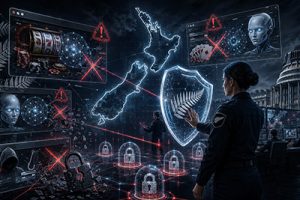
 New Zealand is introducing tighter controls on online casino advertising by banning AI-generated celebrity endorsements and warning the public about fraudulent gambling websites that steal personal and financial information.
The changes come as the Government prepares to launch a regulated online casino market. Under the new system, 15 licences will be issued to approved operators, allowing them to legally offer online casino gambling and advertise their services. Companies that fail to secure a licence through the competitive process will no longer be allowed to provide online casino gambling in the country.
Officials have also highlighted growing concerns about fake endorsements created with artificial intelligence. The Department of Internal Affairs has pointed to a rise in overseas cases where gambling operators use AI-generated images and videos of well-known public figures without permission to attract customers.
One example cited by officials involved a fabricated promotional video featuring TVNZ presenter Jenny-May Clarkson alongside an AI-generated version of filmmaker Taika Waititi. The advertisement promoted a gambling app called “Māori Game” despite neither person having any involvement with it.
AI Deepfakes Prompt Tougher Advertising Rules
Department of Internal Affairs deputy director of gambling Ben Gamboni said the agency has seen more AI-generated gambling promotions appearing internationally and wants to prevent the same trend from taking hold in New Zealand.
Gamboni said people whose likenesses are copied in fake advertisements can experience “harm to themselves and their brand”.
The Government has also raised concerns about scam gambling websites that advertise attractive promotions to lure people into providing sensitive information.
“It’s just a scam and a way to get your details, either for identity theft or just to take the money out of your wallet,” Gamboni warned.
Advertising regulations now prohibit online casino operators from using sponsorships or endorsements in their promotions. The restriction also applies when endorsements are created using artificial intelligence rather than real people.
From December, operators that have not applied for an online casino licence must stop operating in New Zealand. Sponsorships and endorsements remain prohibited forms of advertising whether an operator holds a licence or not.
A Department of Internal Affairs briefing prepared for Internal Affairs Minister Brooke van Velden in February explained why officials believed the law required stronger safeguards around AI-generated promotions.
“These AI endorsements—including synthetic influencers, deepfakes, and other likeness-based representations—are increasingly used internationally and have already been observed in New Zealand, creating risks of consumer deception and contributing to gambling harm,” Minister van Velden was told.
Officials also advised that AI-generated advertising using a person’s likeness “can normalise gambling in ways similar to human endorsements” while creating additional risks through misuse of people’s identities.
Officials Close Advertising Loophole
The briefing explained that earlier advertising rules did not clearly cover AI-generated endorsements because no real person received payment for appearing in the promotion.
“This creates a loophole in the advertising regulations, which we consider should be addressed,” the paper read.
The updated advertising restrictions took effect in July following the advice presented to the minister.
They also ban online casino advertisements during live broadcasts and within 30 minutes before or after those broadcasts. Betting advertisements related to sports and racing fall outside the Online Casino Gambling Act.
Officials expressed concern about “synthetic influencers,” describing them as AI-created personalities designed to resemble real people. According to the briefing, these digital figures can range from highly realistic individuals to cartoon-style or fantasy characters and may have particular appeal among younger audiences, including Gen Z.
The department also identified deepfake technology as another concern because it can imitate the appearance or voice of celebrities, influencers, or other individuals without their permission. Officials warned these fake endorsements create “substantial risk of deception” because they can convincingly appear to show someone promoting a product they have never supported.
Gamboni said younger people could be especially vulnerable to AI-generated celebrity endorsements encouraging gambling.
Officials also acknowledged that concerns surrounding synthetic influencers and deepfake endorsements extend beyond online casino gambling into other areas.
Companies that breach the Online Casino Gambling Act face civil penalties of up to $5 million.
The Department of Internal Affairs is encouraging members of the public who encounter online casino advertisements, including celebrity endorsements, to capture a screenshot and send it to the department so it can investigate.
Source:
Government bans AI-generated celebrity endorsements for online casinos, warns of scams, newstalkzb.co.nz, July 30, 2026.